Facts About Energy Drinks
What consumers expect from an ENERGY DRINK:
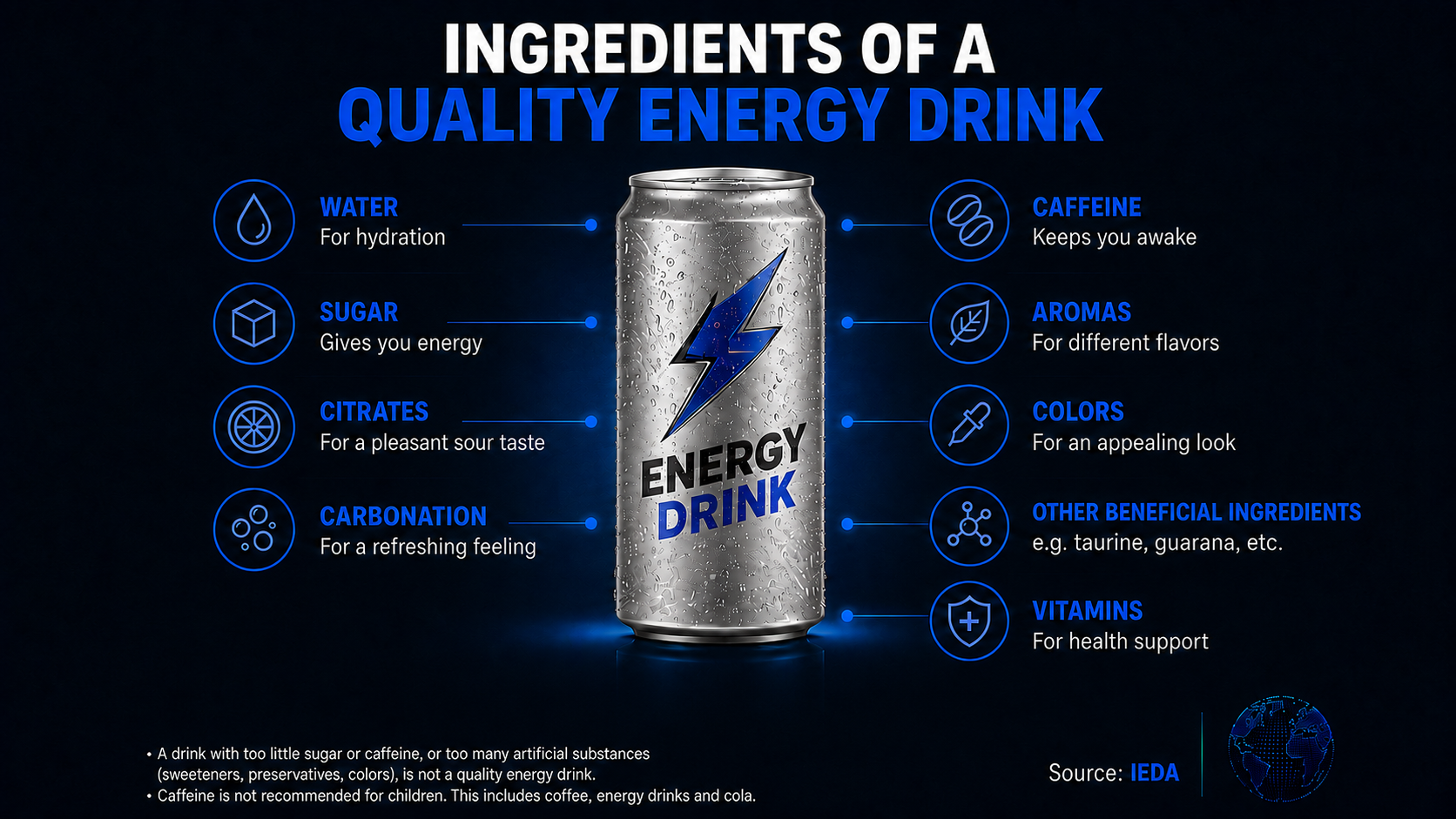
- It should provide ENERGY, as its name suggests. It should contain sugar, as sugar is one of the main sources of energy for the body and the brain. This energy can be measured in calories and is available to the body directly in the form of glucose. A typical energy drink contains approximately 45 kcal of energy per 100 ml.
- It should help maintain ALERTNESS, which is why it should contain caffeine, a substance that contributes to increased alertness and improved concentration. A typical energy drink contains approximately 32 mg of caffeine per 100 ml.
- It should contain VITAMINS and other beneficial ingredients, including vitamins and substances that may help reduce tiredness and fatigue and support mental and physical performance.
Note: So-called “sugar-free” energy drinks can be good sources of caffeine or vitamins. However, due to the absence of sugar, they contain little or no calories and therefore do not provide a meaningful amount of energy to the body.
Safe or not? Science says yes!
Several competent authorities have investigated and confirmed that commercially available energy drinks are safe food products.
How much caffeine can be consumed per day?
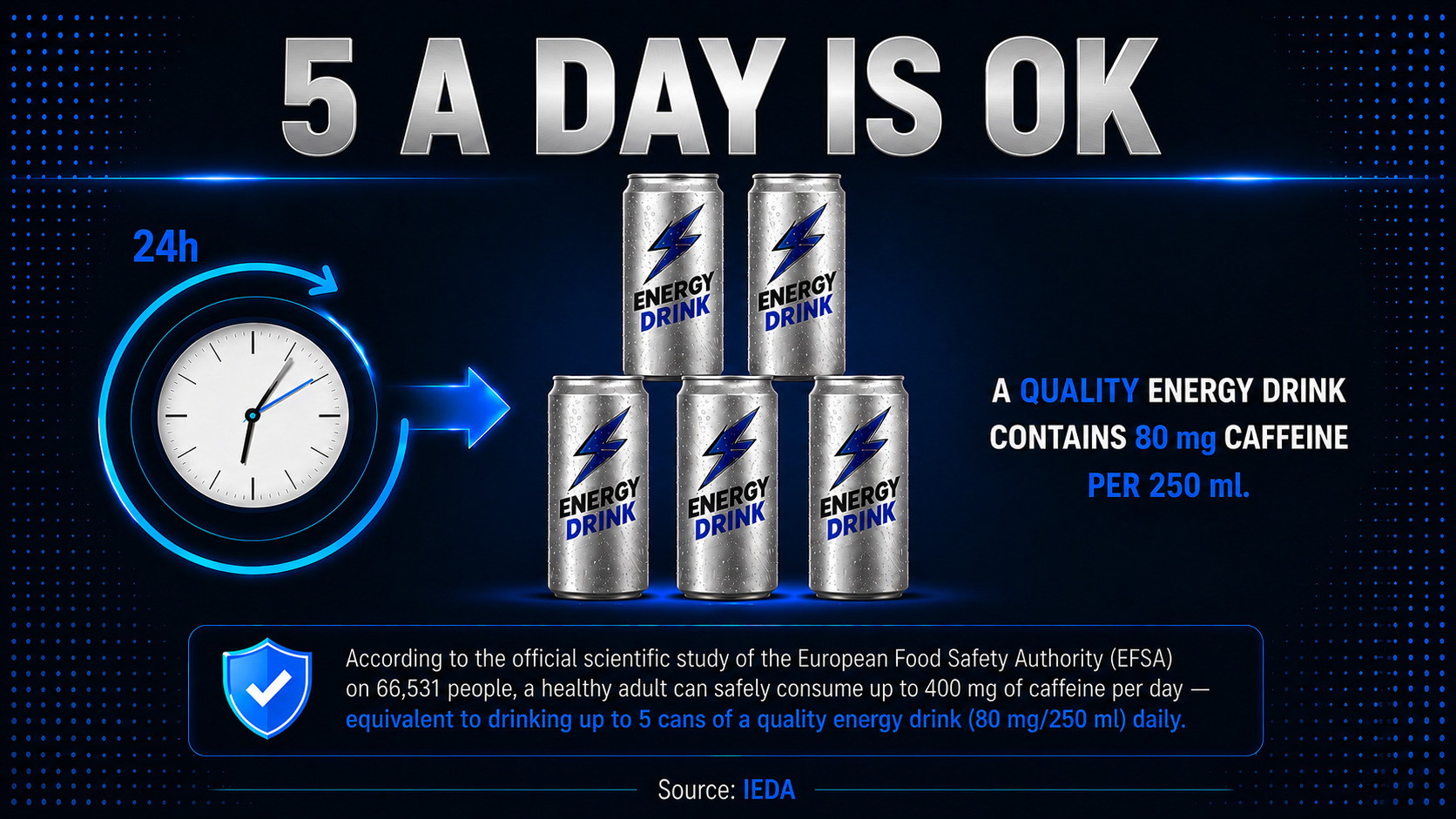
Based on the world’s largest scientific study to date, involving 66,531 people, the European Food Safety Authority concluded that a healthy adult can consume up to 400 mg of caffeine per day without safety concerns. This amount is roughly equivalent to the caffeine content of 5 cans (250 ml each) of energy drink.
How much caffeine is in coffee and energy drinks?
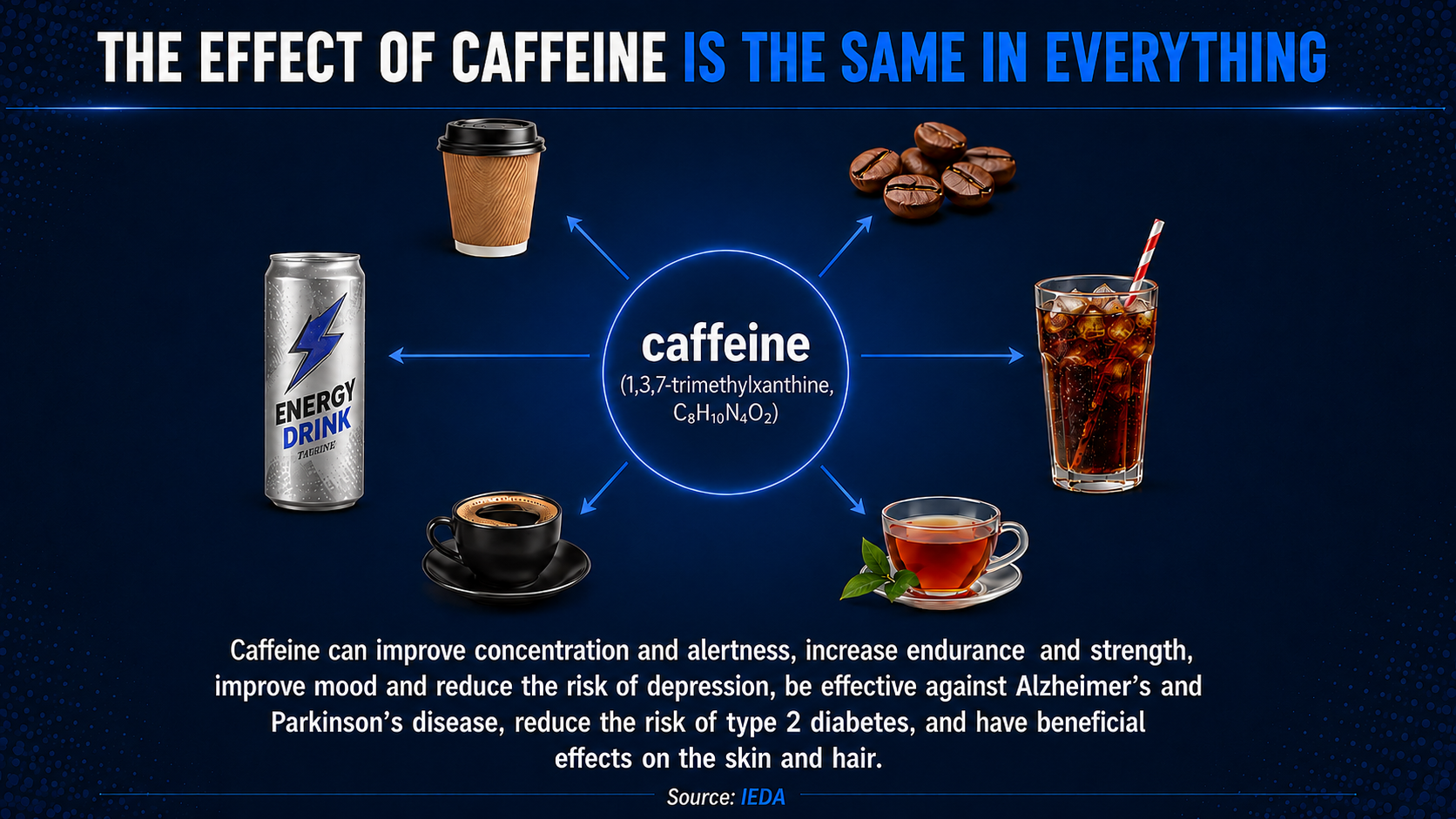
An average 250 ml can of energy drink contains 80 mg of caffeine, which is approximately equivalent to the caffeine content of one cup of espresso.
How much sugar is in an energy drink?
An average 250 ml can of energy drink contains approximately 26 g of sugar, which is about half the amount found in a half-litre bottle of cola (approximately 55 g).
Where and when was the first energy drink created?
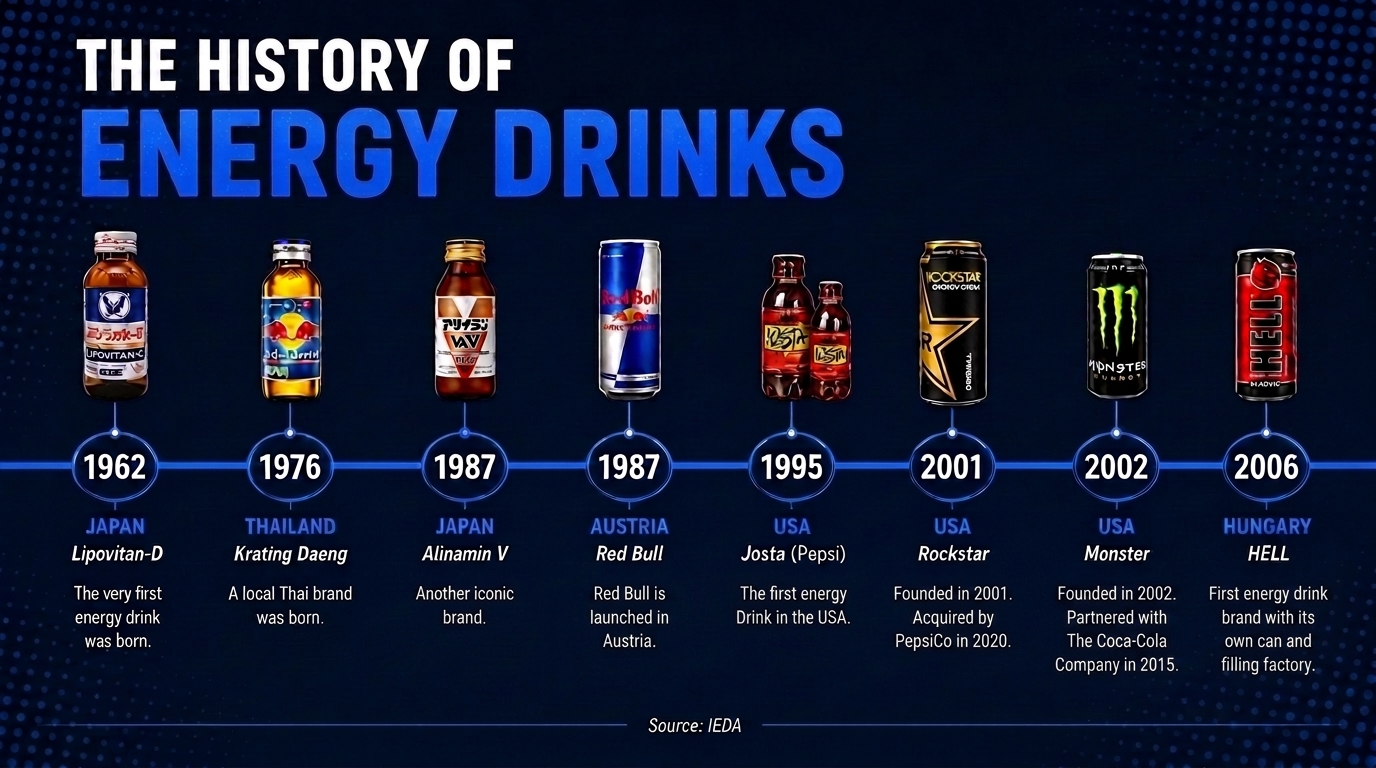
The first energy drink was introduced in Japan in 1962 under the name Lipovitan-D. It immediately became popular among hardworking and health-conscious Japanese consumers, who have regarded it as a reliable companion ever since.
Is there a World Energy Drink Day?
Yes. It is celebrated on December 21. The date is no coincidence: it is the longest night of the year, and perhaps the time when we need a little extra energy the most.
Infographics